Samuel Louissaint

Calendars were built for your workload.Ittsui was built to protect your people.
1. The Product: Ittsui (一対) is an anti-calendar ritual platform built to protect quality 1-on-1 relationships from modern schedule decay.
2. The Problem: Overpacked schedules isolate us from partners, family, and close friends, causing vital human connections to quietly deteriorate.
3. The Friction: Enterprise calendars and messaging apps add heavy decision fatigue—endless ping-pong texting usually defaults to canceled plans.
4. The Solution: Ittsui removes the coordination tax entirely by enforcing a single, frictionless weekly meeting ritual for high-intent duos.
5. The Friday Signal: Every Friday at 18:00, the app pushes one hyper-curated date proposal (e.g., Saturday at 15:30 at a local café or park).
6. 1-Tap Action: Users tap Valider to lock the date instantly or Échanger to toggle a single curated alternative.
7. Zero-Screentime Philosophy: Once locked, the app goes completely silent until the meetup—measuring success by time spent offline, not app engagement.
8. Decoupled & Local-First: Engineered with 0ms optimistic UI updates and deterministic fallback logic so the app works seamlessly even if external APIs fail.
9. Built-in Virality: Growth is naturally organic—every onboarded user immediately invites their exact duo (partner, best friend, or parent).
10. The Incubator Thesis: Ittsui captures the unaddressed consumer market between productivity tools and social media, converting latent relationship intent into guaranteed real-world presence.
ZYVV CORE // THE INTERROGATION PROTOCOL
LLMs work inside your mental model. They trust your framing. They validate what you already believe.
ZYVV does not.
Before generating any output, ZYVV extracts the assumption you did not state, searches for evidence it is wrong, and returns three structurally divergent paths built against verified reality.
Two engines. MANA fetches one live external signal and injects it before your doors generate. YUGA goes deeper, it names what you took for granted, finds the contradiction, and rebuilds everything against the breach.
When you raise an objection, ZYVV does not soften. It diagnoses what the objection reveals and returns a harder path.
Clinical AI aggregates millions of patients to find the statistical average.
Your rare condition. Your nuanced symptom. Your non-linear biology. Filtered out.
The system finds the 95% confidence interval and calls everything outside it noise. Your biology is outside it. That is not noise. That is the diagnosis.
ZYVV Health keeps the diagnostic tool local. Your signal is the only coordinate that runs here.
I design and deploy production-scale AI architectures from the ground up. I build live systems that transform raw, unstructured behavioral signals into actionable, high-conviction decision frameworks.Backed by partner engineering and enterprise execution across Google, X.com, JP Morgan, RBC, and TD. Currently building a suite of sovereign AI products attacking a systemic failure: legacy systems fail because they optimize for centralized averages rather than individual signal.Open to selective partnerships with high-conviction investors and operators.Paris, France

Current Ventures
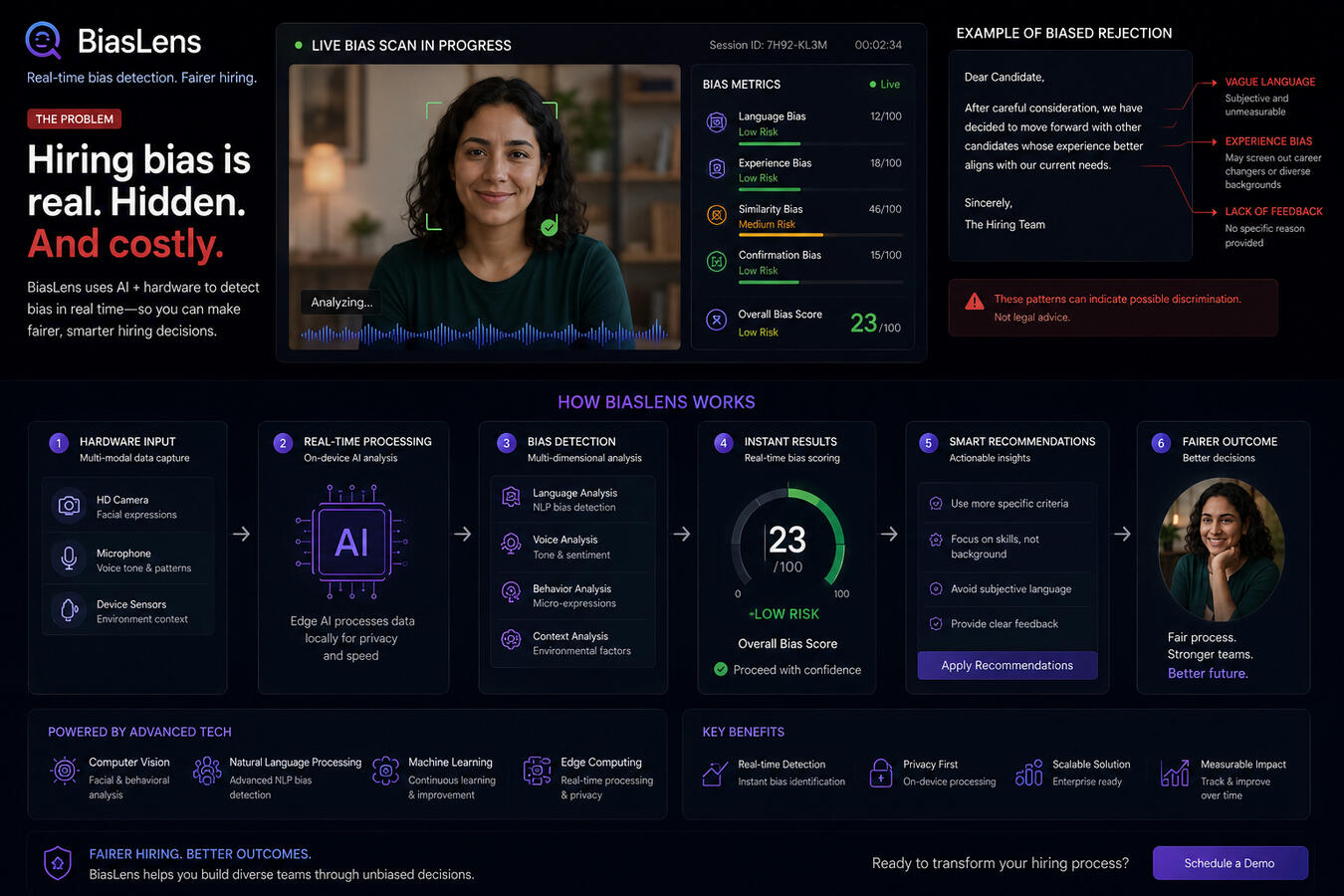
BiasLens Problem. Discrimination in hiring is illegal and very hard for an individual to recognize or prove alone.
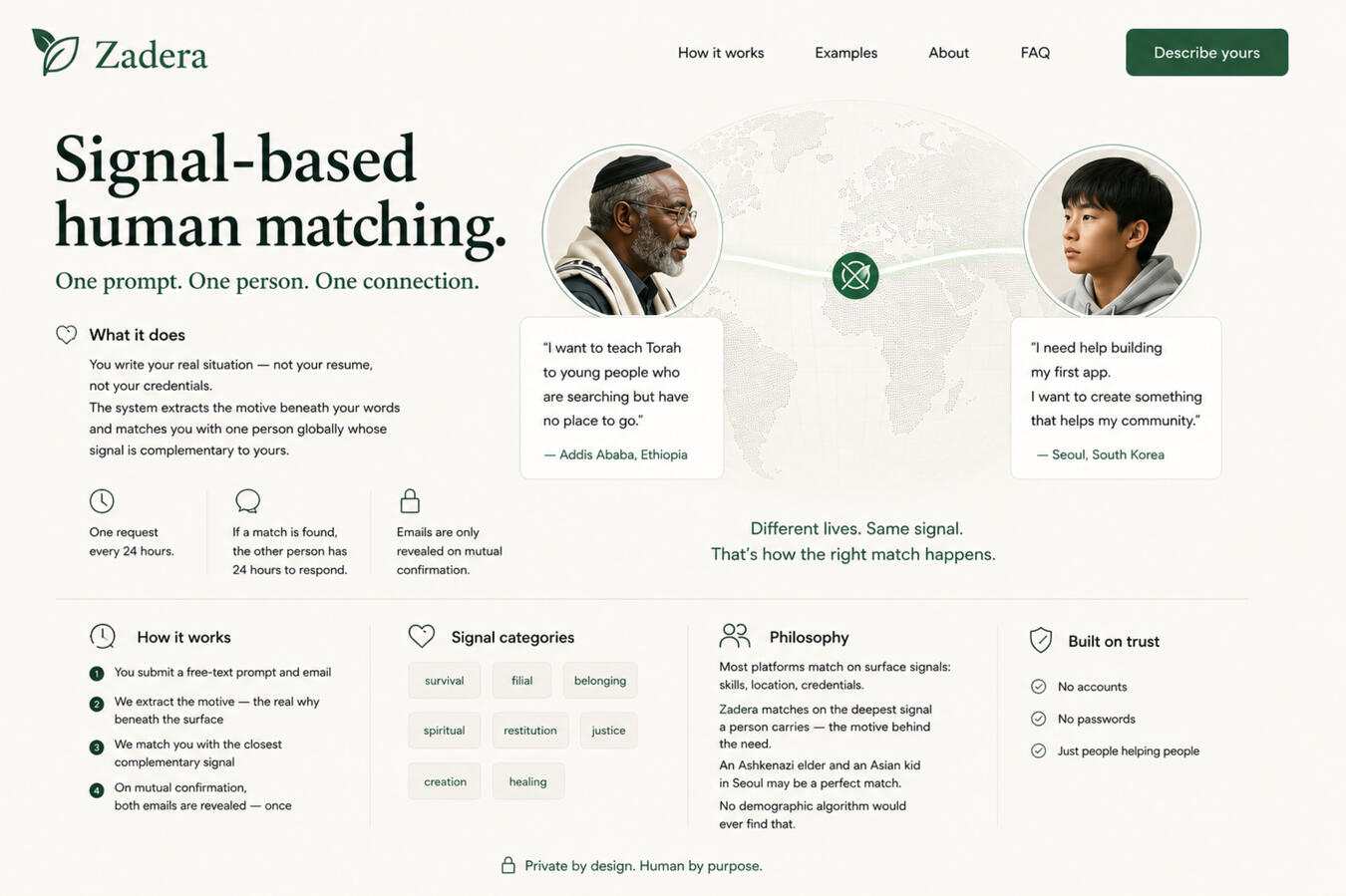
Zadera Problem. Real needs rarely reach the one person who could solve them.

Geniza Problem. Real collectors are priced out of auction houses and unserved by trust-less classifieds.

Chavruta Problem. Adult learning is one-to-many and credential-gated, leaving most curious adults with no peer to think alongside.
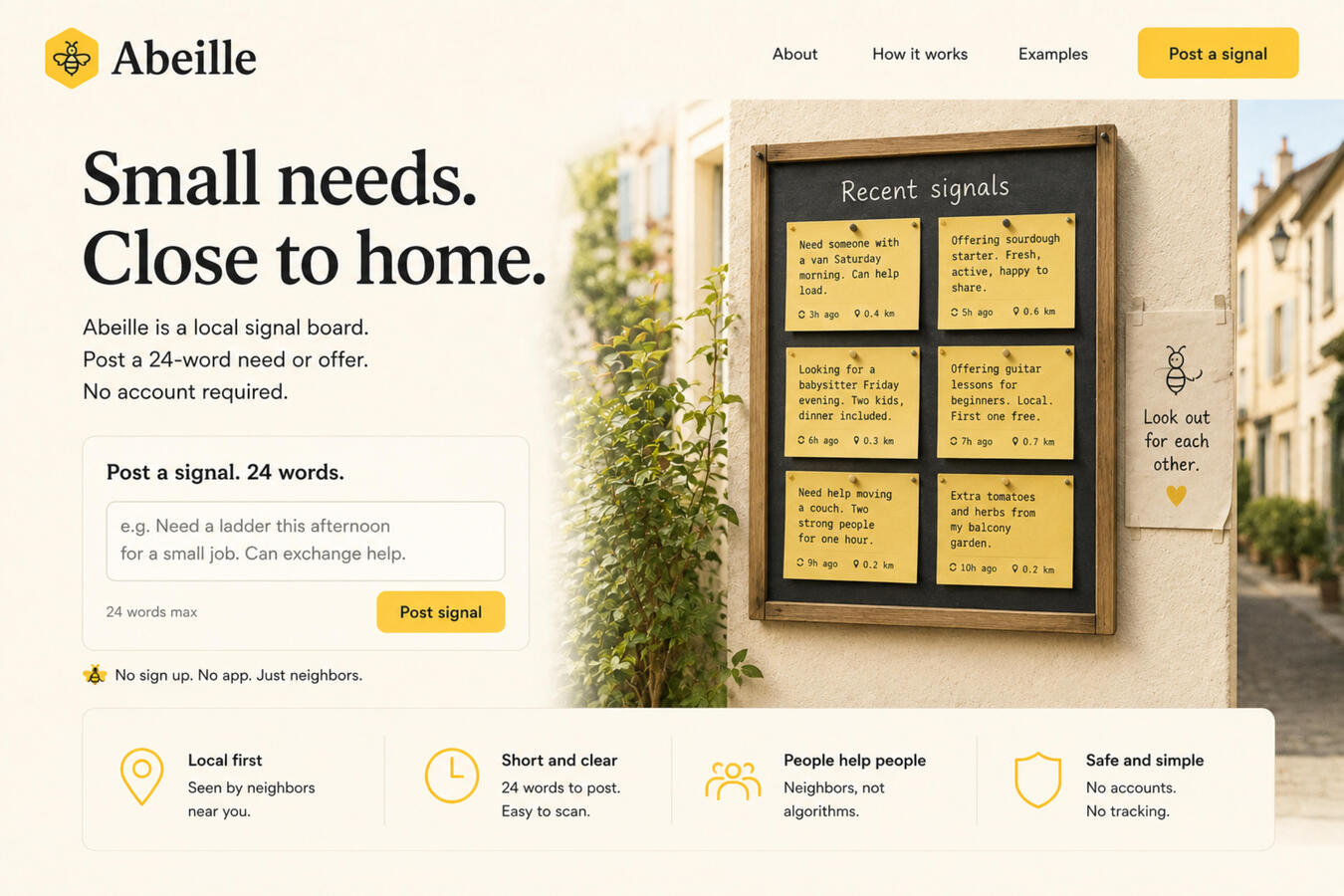
Abeille Problem. Small, urgent needs have nowhere to be posted since local noticeboards disappeared.

Parcelle Problem. Cities have unused growing space and no way to coordinate it.

一対(いっつい) 土曜日だけの約束を守るためのツール ― 出会い系アプリではありません

Ittsui — A tool that protects the meeting itself. Not meeting costs the relationship



ZYVV Health Problem. Clinical AI optimizes for the statistical average — atypical symptoms and rare conditions get filtered out as noise.

ZYVV Problem. Most AI tools just validate the framing you already walked in with.

Cisraoupa Problem. Most advice is hedged enough to ignore.

PALM GALAXY — Five cities. One palm tree. Infinite lasers. Every session tracked.

EQUAI Equal — Credentials filter out talent. Skills should not.

GALPATH — Illegal hacking skills redirected toward legal income and second chances.
BiasLensProblem. Discrimination in hiring is illegal and very hard for an individual to recognize or prove alone.
The question this has to survive: if a bigger company copies this exact feature next month, what's left that's actually yours?
Answer: right now, the documented-pattern library and the trust built from real anonymous usage — not the Groq call itself, which anyone can replicate. That's a real gap to close, not a solved one.
What it does. Paste a rejection, get it scanned against documented US discrimination patterns in 30 seconds. Free, anonymous, no account. Not legal advice — always consult an employment attorney.
GenizaProblem. Real collectors are priced out of auction houses and unserved by trust-less classifieds.
The question this has to survive: what happens to this the day someone lists their first fake?
Answer: the trust layer (provenance, condition, protected payout) is the entire product — if it fails once publicly, there's no second act. That's why it launches manually curated, not open.
What it does. List, trade, or sell collectibles with provenance and protected payment. France first.
ParcelleProblem. Cities have unused growing space and no way to coordinate it.
The question this has to survive: does this get easier to run with the 50th plot, or harder?
Answer: unproven yet — this is exactly why v1 has zero scheduling automation; the real answer comes from running one plot by hand first, not from a roadmap slide.
What it does. Turns a courtyard or rooftop into a member-run micro-farm — time committed, harvest shared, surplus traded.
ZaderaProblem. Real needs rarely reach the one person who could solve them.
The question this has to survive: of everyone matched so far, how many would be upset if this disappeared tomorrow?
Answer: too early to claim — that number is the actual metric that matters here, more than match volume.
What it does. Describe what you can give or need, in your own words — get matched and emailed directly.
AbeilleProblem. Small, urgent needs have nowhere to be posted since local noticeboards disappeared.
The question this has to survive: is anyone posting here who wasn't asked to?
Answer: not yet, honestly — it's pre-launch. That's the actual bar before this is a product rather than a feature.
What it does. Post a 24-word signal — need or offer — no account required.
ZYVV HealthProblem. Clinical AI optimizes for the statistical average — atypical symptoms and rare conditions get filtered out as noise.
The question this has to survive: what happens the first time the "individual signal" is wrong, not just unusual?
Answer: that's exactly why this is framed as research, not a diagnostic device, until there's a real validation framework and clinical review behind it.
What it does. An early-stage, local-first tool exploring how a patient's own case could stay at the center instead of being smoothed into a population model. Research project, not a diagnostic device — not medical advice. Always consult a licensed clinician.
ZYVVProblem. Most AI tools just validate the framing you already walked in with.
The question this has to survive: what does this do that a well-written prompt doesn't already do?
Answer: the dual-engine structure (one grounded in live external evidence, one rebuilt against your unstated assumption) — still the part most worth proving out loud, not just asserting.
What it does. Surfaces the assumption you didn't state and returns three genuinely different paths forward.
ChavrutaProblem. Adult learning is one-to-many and credential-gated, leaving most curious adults with no peer to think alongside.
The question this has to survive: has one real pair actually met twice yet?
Answer: not yet — that's the actual Phase 1, before any matching algorithm is worth building.
What it does. Pairs you with someone whose knowledge fills your gap, around one shared text, for one real conversation.
CisraoupaProblem. Most advice is hedged enough to ignore.
The question this has to survive: is this the company, or the marketing for the other eight?
Answer: honestly still open — and worth deciding deliberately rather than letting it default to one or the other.
What it does. A 3-round AI roast game that turns a real situation into sharp, shareable feedback.
# Ittsui Japan (一対)
### A tool that protects the one Saturday you have — not a dating app.In one sentence: Ittsui doesn't help you find someone. It helps you keep the one person you already have, when work leaves you no time to.---## First, what this is notIttsui is not a dating app, not a matching app, and not a discovery platform. There is no swiping, no browsing, no strangers, no public profile, no algorithm suggesting people to meet. You link exactly one existing contact — a friend or a partner — and Ittsui's only job is to protect the one time slot you both actually have free: Saturday.If you already have someone in your life and the problem is time, not who — Ittsui is for you. If you're looking to meet someone new, Ittsui has nothing to offer you, on purpose.## The problemThis came directly from a woman living alone in Tokyo, describing her own week:- She's not lonely in the way people assume. She's genuinely comfortable alone — Netflix, solo ramen, living by herself. Tokyo is built for this: convenience stores, delivery, solo-dining counters mean you never need anyone to get through a day.
- But "comfortable alone" quietly became "no friends in the city." The ease of not needing anyone made it easy to stop making the effort to keep people close — that's a different problem from loneliness, and a harder one to notice.
- She's wary of strangers, more so as a woman. Any product built around meeting new people — matching, discovery, group events — is a non-starter for her before it even opens.
- Her real constraint is time, not desire. 8–10 hour workdays. Weekdays are gone. Sunday is needed for sleep and recovery. Friday and Saturday are the only open window — and even that gets decided the same day, not planned in advance.
- It hits every relationship the same way. She named "friends" and "boyfriend" in the same breath, describing the identical shortage. This isn't a dating problem or a friendship problem — it's a time problem that happens to sit on top of both.
- She was explicit: this isn't a phase. She doesn't expect it to change in 10 or 20 years. It's structural — built into how Japan works — not something she'll grow out of.## Why the existing options don't fit| | Dating apps | Group meetups | Anonymous SNS (e.g. X/Twitter) | Ittsui |
|---|---|---|---|---|
| Assumes you... | want to meet someone new | want to meet several new people | want to stay anonymous forever | already have someone |
| Requires | swiping, profiles, matching | RSVPs, social energy | nothing — and gives nothing back | one tap, once |
| Stranger risk | high | moderate | low, but no real connection | none — no strangers, ever |
| Solves | discovery | discovery | anonymity | time |Her actual problem — no time to keep the one relationship she has — sits outside all four existing categories.## What Ittsui doesIttsui is a maintenance tool for one relationship you already have, delivered entirely through LINE — nothing to install.Setup (once): You link one contact. There's no relationship-type field — it doesn't ask if they're a friend or a partner, because the mechanic is identical either way, and asking buys nothing. You agree on a standing Saturday slot. That's it — this step doesn't repeat.Every week, automatically:
- Friday, ~7–8pm — once the work week is actually over — Ittsui sends one message confirming Saturday: a specific place and a specific hour, pulled from things you've already said you like (e.g. a ramen spot you enjoy). No open-ended "what do you want to do?" No menu, no negotiation.
- ~10–11pm Friday — both people tap yes, or don't. Both yes → it locks. Anything else → it quietly cancels. No thread, no chasing, no guilt.
- Monday–Thursday and all of Sunday — complete silence. No notification touches days that are already spoken for or already gone.## What Ittsui is not, one more time- Not a way to meet someone new.
- Not a group or community product.
- Not a calendar or generic reminder app — it doesn't ask you to plan; it proposes a specific, ready-to-accept plan and gets out of the way.
- Not a growing feature set — the constraint she described is permanent, so the product stays this simple, deliberately, at year five and not just on day one.## Why anyone would pay for this¥480/month, or ¥4,800/year (two months free). One person can pay for the pair, gift-style — the other never needs to transact.- Paid via LINE Pay, not a separate app or card entry: nothing new to install, and a percentage-based fee (~3.45%+tax) doesn't punish a low price the way Stripe Japan's flat ¥30-per-transaction fee would.
- The price is intentionally not free. A near-zero price reads as "did they tap a button," not "did they actually choose this." ¥480 is cheap enough to be an easy yes and real enough to be a genuine signal that someone values the thing being protected.---## Questions an investor will ask"Isn't this just a scheduling reminder? Why would anyone pay for that?"
Because the thing being protected isn't a meeting — it's a relationship, on a deadline that quietly resets every week. Google Calendar assumes you already know what to plan and when; Ittsui removes the planning entirely and turns "we should hang out sometime" into a default that only requires a tap to keep. This is the single most important thing to validate before scaling — the mutual "yes" rate on Friday proposals is the number that proves or disproves it."There's no discovery, no network effect, no virality. How does this grow?"
It doesn't grow the way a marketplace does, and that's a deliberate trade-off, not an oversight — the whole pitch is "no strangers, ever." Growth has to come from word of mouth between people who already have this exact problem, not a viral loop. Worth having a concrete answer ready: how will the first 100 pairs actually hear about it?"What's the market size if it's one relationship per user, with no upsell path?"
Honestly: this is a small, dense wedge, not a platform play, at least at first. The market is every pair in Japan who both want to keep seeing each other and both lack the time to coordinate it — large in absolute terms given Japan's work-hours culture, but there's no stated TAM or expansion path yet. Worth putting a real number on this, even a rough one, before investor meetings."What happens when the relationship changes or ends? Isn't churn built in?"
Some churn is structural and healthy — a breakup should end a subscription, not trap someone in it. The retention question that actually matters is narrower: among pairs where the relationship continues, does Ittsui keep being the reason they still see each other? That's what month-2 renewal is meant to measure."Why Japan-only? Why not expand?"
The problem — long work hours squeezing every relationship into a single weekend slot — is specific to how work culture in Japan operates. The product's simplicity depends on solving one very specific version of the time problem well, not a general one everywhere. Expansion is a later question, not a now one."Can one founder actually build and run this?"
Yes — the product is intentionally small: one backend, two external APIs (LINE and a payment processor), no microservices, no infrastructure a solo pre-seed founder can't reasonably operate and monitor."What's defensible here? Couldn't anyone copy a Friday reminder bot?"
The mechanic is simple by design and not hard to copy technically. What's harder to copy is getting the tone right — a product that reads as caring, not naggy, that never becomes another notification you dread. Worth naming this risk plainly to investors rather than papering over it — the defensibility case rests on execution and trust, not technical complexity.## What to track- Mutual "yes" rate on Friday proposals — shows whether a real meeting actually happens, not just a match or a chat.
- Paid conversion rate at signup — do people who understand the product choose to pay for it.
- Month-2 renewal rate — the first honest signal that Ittsui is still the reason two people are seeing each other.---
---# 一対(いっつい)
### 土曜日だけの約束を守るためのツール ― 出会い系アプリではありません一言で言うと: 一対は新しい出会いを探すためのサービスではありません。忙しくて時間がない中でも、すでにある大切な一人との関係を守るためのツールです。## まず、これは「〜ではない」という説明から一対は、出会い系アプリでも、マッチングアプリでも、新しい人を見つけるためのサービスでもありません。スワイプも、プロフィール閲覧も、見知らぬ人との出会いも、公開投稿も、おすすめアルゴリズムも一切ありません。すでにある一人の相手(友人でも恋人でも)だけをリンクし、一対がすることはただ一つ ― ふたりに実際にある唯一の自由時間「土曜日」を守ることです。すでに大切な人がいて、問題が「誰と」ではなく「時間がない」ことなら、一対はそのためのツールです。新しい出会いを求めている方には、一対は意図的に何も提供しません。## 課題これは東京でひとり暮らしをする女性への実際のインタビューから得られた声です。- 彼女は世間が想像するような「孤独」を感じているわけではありません。 ひとりでいることは本当に快適です ― Netflix、ひとりラーメン、ひとり暮らし。東京はまさにそのために作られた街です。コンビニ、宅配、ひとり用カウンター席 ― 誰にも頼らなくても一日を過ごせます。
- しかし「ひとりで平気」は、いつの間にか「街に友達がいない」に変わっていました。 誰も必要としなくて済む快適さが、人とのつながりを保つ努力を静かに減らしていた ― これは孤独とは違う問題で、気づきにくい問題です。
- 彼女は見知らぬ人とのつながりに警戒心があります。特に女性として。 マッチングや発見型の出会い系プロダクトは、始まる前から選択肢に入りません。
- 本当の制約は「時間」であり、「意欲」ではありません。 平日は8〜10時間労働。平日はほぼ使えません。日曜日は睡眠と回復のために必要です。自由に使えるのは金曜・土曜だけ ― それも当日にならないと決まりません。
- これはどの関係にも同じように影響します。 彼女は「友達」と「彼氏」を同じ文脈で語り、まったく同じ時間不足に悩んでいると話しました。これは恋愛の問題でも友情の問題でもなく、その両方の上に乗っている「時間の問題」です。
- 彼女ははっきりと言いました。「これは一時的なものではない」と。 10年後も20年後も変わらないだろうと彼女は考えています。日本の働き方に組み込まれた構造的な制約であり、いずれ卒業するような一時的な段階ではありません。## 既存の選択肢が合わない理由| | 出会い系アプリ | 集団の交流イベント | 匿名SNS(例: X/Twitter) | 一対 |
|---|---|---|---|---|
| 前提 | 新しい人に出会いたい | 複数の新しい人に出会いたい | ずっと匿名のままでいたい | すでに大切な人がいる |
| 必要なもの | スワイプ、プロフィール、マッチング | 参加表明、社交エネルギー | 何も必要ない代わりに何も得られない | 一度だけのタップ |
| 見知らぬ人のリスク | 高い | 中程度 | 低いが本当のつながりはない | ゼロ ― 見知らぬ人は一切登場しない |
| 解決すること | 「発見」 | 「発見」 | 「匿名性」 | 「時間」 |彼女の本当の課題 ― すでにある関係を維持する時間がないこと ― は、この4つのどの既存カテゴリーにも当てはまりません。## 一対がすること一対は、すでにある一つの関係をメンテナンスするためのツールで、すべてLINE上で完結します。アプリのインストールは不要です。初回セットアップ(一度だけ): 相手を一人だけリンクします。「友達」か「彼氏」かを選ぶ項目はありません ― どちらでもメカニクスは同じなので、分類を求めても何の意味もないからです。土曜日の枠を一度だけ合意します。それだけで、以降繰り返す設定はありません。毎週、自動的に:
- 金曜19〜20時ごろ(仕事が本当に終わった後)― 土曜日の予定を確認するメッセージが1通届きます。すでに好きだと分かっている場所と時間(例えば気に入っているラーメン店)から、具体的な「店名+時間」で提案されます。「何がしたい?」という漠然とした質問も、メニューの相談や交渉もありません。
- 金曜22〜23時ごろ ― ふたりがそれぞれ「はい」をタップするか、しないか。両方が「はい」なら予定が確定します。それ以外は静かにキャンセルされます。スレッドも、催促も、罪悪感もありません。
- 月〜木、そして日曜日は完全にサイレント。 すでに決まっている日、あるいはすでに過ぎた日に通知が届くことはありません。## 一対が「〜ではない」ことをもう一度- 新しい人と出会う手段ではありません。
- グループやコミュニティのプロダクトではありません。
- カレンダーや汎用リマインダーアプリでもありません ― 計画を「立てさせる」のではなく、すぐに承諾できる具体的な予定を「提案し」、それ以上は何もしません。
- 機能を増やし続けるプロダクトでもありません ― 彼女が語った制約は恒久的なものなので、プロダクトはあえてこのシンプルさを5年後も保ちます。## なぜお金を払う価値があるのか月額¥480、または年額¥4,800(2ヶ月分お得)。ふたりのうちどちらか一人が支払えば、ギフトのようにふたりで利用できます。- 決済はLINE Pay ― 別アプリのインストールも、カード情報の入力も不要です。手数料は率制(約3.45%+税)で、Stripe Japanの1件あたり定額(約¥30)と違い、低価格のサブスクリプションでも手数料に負けません。
- 価格をあえて無料にしていません。ほぼ¥0の価格は「ボタンを押しただけ」に見えてしまい、「本当に選んで支払った」ことの証明になりません。¥480は「気軽にはいと言える」ほど安く、同時に「本当に大切にしているものがある」という本物のシグナルになるほど現実的な金額です。---## 投資家が必ず聞く質問「これはただのリマインダーでは?なぜお金を払う人がいるのか?」
守っているのは「会議」ではなく「関係」だからです。しかもその関係には、毎週静かにリセットされる締め切りがあります。Googleカレンダーは「何をいつ計画するか」をすでに知っている前提で作られていますが、一対は計画すること自体をなくし、「そのうち会おうね」を、タップひとつで保てる「デフォルト」に変えます。ここは実証が最も重要な部分です。金曜の提案に対する相互「はい」率こそ、この仮説が正しいかどうかを証明する数字です。「発見もネットワーク効果もバイラリティもない。どうやって成長するのか?」
マーケットプレイス型のようには成長しません。それは見落としではなく、意図的なトレードオフです ― 「見知らぬ人は一切登場させない」がこのプロダクトの核心だからです。成長は、まさにこの課題を抱えているふたりからの口コミによって生まれる必要があり、バイラルループからではありません。最初の100組にどうやって届けるか、具体的な答えを用意しておく価値があります。「ひとりにつき一つの関係しか扱わず、アップセルの道筋もない。市場規模はどれくらいか?」
正直に言うと、少なくとも最初は、プラットフォーム型ではなく、小さく密度の高い「くさび」型のビジネスです。市場は、日本において「会い続けたいのに調整する時間がない」ふたり全員であり、日本の労働時間文化を考えると絶対数としては大きいはずですが、現時点で明確なTAM(獲得可能な市場規模)や、その先の拡張ロードマップは提示できていません。投資家との面談前に、概算でも構わないので実際の数字を用意する価値があります。「関係が変わったり終わったりしたらどうなるのか?解約は織り込み済みなのか?」
一部の解約は構造的で、むしろ健全なものです ― 別れが起きたのに解約できないのはおかしいはずです。本当に重要な継続率の問いはもっと狭い範囲にあります。関係が続いているペアの中で、一対が「今も会い続けている理由」であり続けているかどうか。それを測るのが2ヶ月目の継続率です。「なぜ日本限定なのか?なぜ拡大しないのか?」
長時間労働があらゆる関係を週末の一枠に押し込めてしまうという課題は、日本の働き方に特有のものです。このプロダクトのシンプルさは、「時間の問題」の非常に具体的な一版をうまく解くことに依存しており、どこでも通用する一般解ではありません。拡大は後で考える問いであり、今の問いではありません。「創業者ひとりで本当に構築・運用できるのか?」
できます ― プロダクトは意図的に小さく作られています。バックエンドは一つ、外部APIはLINEと決済プロバイダの二つだけ。マイクロサービスも、ひとりのプレシード創業者が現実的に運用・監視できないインフラも存在しません。「防御力は何か?金曜のリマインダーボットなら誰でも真似できるのでは?」
メカニクス自体は意図的にシンプルで、技術的に真似するのは難しくありません。真似しにくいのは「トーン」です ― うるさく感じさせず、思いやりとして受け取ってもらえ、決して「また来た憂鬱な通知」にならないこと。これは投資家に率直に伝える価値のあるリスクです。防御力の根拠は技術的な複雑さではなく、実行力と信頼にあります。## 追うべき指標- 金曜の提案に対する相互「はい」率 ― マッチや会話ではなく、実際に人が会えたかどうかを示す数字。
- サインアップ時の有料転換率 ― プロダクトを理解した人が、実際にお金を払う選択をするかどうか。
- 2ヶ月目の継続率 ― 一対が「今もふたりが会い続けている理由」であるという、最初の本当のシグナル。---Portfolio / ポートフォリオ: samuellouissaint.carrd.co
# Ittsui (一対) — Monetization, Explained
### How it makes money, and why each choice was made this way — not guessed.In one sentence: Ittsui is a ¥480/month subscription, paid through LINE Pay, where one person can cover the pair — priced to be an easy yes and still a real signal that someone values what's being protected.---## Why a subscription, not something elseThe product exists to protect a relationship every single week, forever — not to sell a one-time thing or a single event. The pricing model has to match that.| Model | Why it doesn't fit Ittsui |
|---|---|
| Free + ads | Ads inside a product about protecting a private relationship undermine the exact trust the product depends on. |
| One-time purchase | The value repeats every week, indefinitely — a one-time fee doesn't match ongoing weekly value, and gives no reason to keep the service running well after month one. |
| Pay-per-meeting | This reintroduces the negotiation and friction the product is explicitly designed to remove. Charging per Saturday would make every week feel like a transaction instead of a standing plan. |
| Subscription | Matches the product exactly: a standing, recurring commitment, protected the same way every week, for as long as the relationship continues. |## Why ¥480/month specifically- Not free. A near-¥0 price reads as "did they tap a button," not "did they choose this." Investors — and the founder — need a real signal of intent, not a vanity signup count.
- Not expensive. ¥480 is roughly the price of a single convenience-store coffee. It has to be cheap enough that saying yes requires no real thought, because the product's whole premise is removing friction, including the friction of a purchase decision.
- Annual option (¥4,800/year, 2 months free) rewards people who already trust the product enough to commit past month one, and improves cash flow and retention visibility for the business.## Why LINE Pay, not Stripe, PayPal, or Apple/Google Pay| | Stripe (Japan) | PayPal | LINE Pay |
|---|---|---|---|
| Install/setup friction | Card entry, separate checkout | Separate account/app | None — already inside the LINE chat where the product lives |
| Fee structure | ~3.6% + flat ¥30/transaction | Similar flat-fee exposure | ~3.45% + tax, no flat per-transaction penalty |
| Impact on a ¥480 price | Flat fee eats a disproportionate share of a small subscription | Same issue | Percentage-based fee scales fairly with a low price |
| Trust / familiarity in Japan | Requires trusting a card form | Requires a separate account | Already trusted, already installed, already used daily |Because Ittsui lives entirely inside LINE, asking someone to leave the chat to enter card details anywhere else reintroduces exactly the kind of friction the product is built to avoid.## Why one payer can cover the pairEither person in the pair can pay, and it covers both. This isn't a workaround — it matches how the relationship actually works:- It removes an awkward negotiation ("should we split this?") from a product whose entire value proposition is removing negotiation.
- It mirrors a gift: one person choosing to protect the relationship for both of them is a stronger, more natural signal than forcing two separate transactions.
- It avoids a real risk: requiring both people to independently pay would cut conversion sharply, since it depends on two separate willingness-to-pay decisions instead of one.## How billing trust is protectedBecause this is a recurring charge on a relationship product, trust in the billing itself matters as much as trust in the product:- Clear pre-charge consent — no charge happens without an explicit, visible agreement to the price and cadence.
- Recognizable LINE billing descriptor — so the charge is never mistaken for something suspicious on a statement, which is a common cause of unnecessary disputes.
- Pre-renewal reminder sent via LINE — nobody is charged for a renewal they forgot they'd agreed to.
- One-tap cancel — friction-free cancellation is what makes the friction-free subscribe trustworthy in the first place.## How pricing was tested, not guessedBefore writing production code, willingness to pay was tested manually — real payment links, real asks, against real people who fit the target problem — rather than assumed from a spreadsheet. [This is worth stating to investors with the actual numbers from that test once you have them: conversion rate on the manual test, how many people said yes at ¥480 specifically, and whether anyone balked at the price.]---## Questions an investor will ask about monetization"Why not freemium, with a paid tier for extra features?"
There's no second tier planned, on purpose — the product is deliberately not supposed to grow a feature list, since the constraint it solves is permanent. A free tier would also undercut the "real signal" the ¥480 price is meant to create."Isn't ¥480/month too small to build a real business on?"
Alone, yes — this is a small transaction size, and the business case rests on volume and retention, not on price. The real economic question isn't "how much per pair" but "how many pairs, and for how long." [Worth pairing this answer with your actual cost-to-serve per pair — LINE messaging costs, Supabase, hosting — so you can show the margin per subscriber, not just the sticker price.]"What's the LTV, given relationships end?"
LTV here is a function of relationship duration × monthly retention while the relationship is intact, not of engineered stickiness. Some churn is healthy churn — see the main spec's answer on this — so the real question is the month-2, month-6, and month-12 renewal curve. [This is the number to bring to a raise once you have even two or three months of real cohort data.]"What's the platform risk of depending on LINE Pay?"
Real, and worth naming directly rather than downplaying: the payment rail is a dependency on LINE's policies and fee structure, not something Ittsui controls. The mitigating factor is that LINE is the dominant messaging platform in Japan and unlikely to disappear, but a fee or policy change is a real risk to margin, not just a hypothetical one."Could you charge more later?"
Possibly, but the pitch depends on ¥480 being an easy yes — raising the price is a real trade-off against the "low-friction, no negotiation" identity of the whole product, not a free lever to pull. [Worth having a stated view — even a tentative one — on whether price increases are on the roadmap at all, since investors will ask this directly.]---
---# 一対(いっつい)― 収益化モデルの説明
### なぜこの形でお金を得るのか。すべて「推測」ではなく「設計」です。一言で言うと: 一対は月額¥480のサブスクリプションで、決済はLINE Payを通じて行われ、ふたりのうちどちらか一人が支払えばペアで利用できます。価格は「気軽にはいと言える」ほど安く、それでいて「本当に大切にしているものがある」という本物のシグナルになるよう設計されています。---## なぜサブスクリプションなのかこのプロダクトは、一つの関係を毎週、永続的に守り続けるために存在します ― 一度きりの商品や単発イベントを売るものではありません。価格モデルはそれに合わせる必要があります。| モデル | 一対に合わない理由 |
|---|---|
| 無料+広告 | プライベートな関係を守るプロダクトの中に広告を入れることは、このプロダクトが依存している信頼そのものを損ないます。 |
| 買い切り | 価値は毎週、無期限に繰り返されます。買い切りの料金は継続的な週次の価値と噛み合わず、1ヶ月目以降もサービスを良い状態で維持し続ける動機を生みません。 |
| 利用ごとの課金 | これはプロダクトが意図的に取り除いた「交渉」と「摩擦」を再び持ち込んでしまいます。土曜日ごとに課金すれば、毎週が「決まった約束」ではなく「取引」のように感じられてしまいます。 |
| サブスクリプション | プロダクトの性質にぴったり合います ― 関係が続く限り、毎週同じように守られる、継続的なコミットメントです。 |## なぜ月額¥480なのか- 無料ではありません。 ほぼ¥0の価格は「ボタンを押しただけ」に見えてしまい、「本当に選んだ」ことの証明になりません。投資家にも創業者自身にも、見栄えだけの登録数ではなく、本物の意思のシグナルが必要です。
- 高すぎません。 ¥480はコンビニコーヒー1杯程度の金額です。「はい」と言うのにほとんど迷いが要らないくらい安くする必要があります ― このプロダクトの前提は摩擦を取り除くことであり、それは購入の意思決定における摩擦も含まれるからです。
- 年額プラン(¥4,800/2ヶ月分お得) は、1ヶ月目を超えてすでにプロダクトを信頼してくれている人に報い、ビジネス側にとってもキャッシュフローと継続率の見通しを改善します。## なぜStripeやPayPal、Apple/Google Payではなく LINE Pay なのか| | Stripe(日本) | PayPal | LINE Pay |
|---|---|---|---|
| 導入・設定の手間 | カード情報の入力、別画面での決済 | 別アカウント/別アプリが必要 | 不要 ― プロダクトが動いているLINEのトーク内で完結 |
| 手数料の構造 | 約3.6%+1件あたり定額¥30 | 同様の定額手数料の負担 | 約3.45%+税、定額のペナルティなし |
| ¥480という価格への影響 | 定額手数料が小さなサブスクリプションの中で不釣り合いに大きな割合を占める | 同様の問題 | 率制の手数料は低価格でも公平にスケールする |
| 日本での信頼・馴染みやすさ | カード入力フォームを信頼する必要がある | 別アカウントを信頼する必要がある | すでに信頼され、すでにインストールされ、すでに日常的に使われている |一対はすべてLINEの中で完結するプロダクトなので、カード情報を入力するために別の場所へ移動させることは、まさにこのプロダクトが取り除こうとしている摩擦を再び持ち込むことになります。## なぜどちらか一人が支払えばふたりで使えるのかペアのどちらが支払っても構わず、それでふたりとも利用できます。これは回避策ではなく、実際の関係のあり方に合わせた設計です。- 「割り勘にする?」という気まずい交渉を取り除きます ― このプロダクトの価値そのものが「交渉をなくすこと」だからです。
- ギフトのような形になります ― ひとりがふたりのために関係を守ることを選ぶことは、ふたり別々に決済させるよりも、より自然で強いシグナルです。
- 実際のリスクを避けます ― ふたり別々に支払いを求めると、2つの独立した「支払う意思」に依存することになり、転換率が大きく下がる恐れがあります。## 決済への信頼をどう守るかこれは関係性を扱うプロダクトの継続課金なので、プロダクトそのものへの信頼と同じくらい、課金そのものへの信頼が重要です。- 課金前の明確な同意 ― 価格と頻度への明示的で目に見える同意なしに課金は発生しません。
- LINE上でわかりやすい請求元表示 ― 明細に見覚えのない請求として映り、不必要な問い合わせにつながることを防ぎます。
- 更新前のLINEによるリマインド ― 同意したことを忘れていた更新で課金される、ということが起きません。
- ワンタップでの解約 ― 解約が摩擦なくできることこそが、そもそも摩擦のない「登録」を信頼できるものにします。## 価格は推測ではなく検証されたもの本番のコードを書く前に、実際の決済リンクと実際の依頼を使って、この課題に当てはまる実在の人々に対して支払い意思を検証しました ― スプレッドシート上の想定ではなく。[この検証で得た実際の数字 ― 手動テストでの転換率、¥480で実際に「はい」と言った人数、価格に対して躊躇した人がいたかどうか ― を投資家に伝える際は、ぜひ実数で語ってください。]---## 投資家が収益化について必ず聞く質問「なぜフリーミアムにして、有料の上位プランを作らないのか?」
上位プランは意図的に用意していません ― このプロダクトが解決する制約は恒久的なので、機能リストを増やしていくこと自体を避けています。無料プランを作ると、¥480という価格が作ろうとしている「本物のシグナル」も弱まってしまいます。「月額¥480は事業としては小さすぎないか?」
単体で見ればその通りです ― これは小さな取引額であり、事業として成立するかどうかは価格ではなく、規模と継続率にかかっています。本当に重要な経済的な問いは「一組あたりいくらか」ではなく「何組が、どれくらいの期間使い続けるか」です。[LINEメッセージ費用、Supabase、ホスティングなど、一組あたりの実際の提供コストと合わせて答えると、単なる価格表示ではなく、加入者あたりの粗利益を示せます。]「関係が終わることを考えると、LTVはどうなるのか?」
ここでのLTVは「関係の継続期間 × 関係が続いている間の月次継続率」の関数であり、人工的な粘着性の話ではありません。一部の解約は健全な解約です(本編の回答を参照)。本当に重要な問いは、2ヶ月目、6ヶ月目、12ヶ月目の継続率カーブです。[実際のコホートデータが2〜3ヶ月分でも揃った段階で、資金調達の場に持っていくべき数字です。]「LINE Payに依存することのプラットフォームリスクは?」
実在するリスクであり、軽視せず正直に伝える価値があります。決済の基盤はLINE側のポリシーと手数料構造に依存しており、一対がコントロールできるものではありません。緩和要因は、LINEが日本で圧倒的に支配的なメッセージングプラットフォームであり、簡単には消えないことですが、手数料やポリシーの変更は仮定ではなく、実際に利益率に影響し得るリスクです。「今後、価格を上げることはできるのか?」
可能性はありますが、この事業の前提は「¥480が気軽にはいと言える価格である」ことに依存しています。値上げは、プロダクト全体の「摩擦がなく、交渉のない」というアイデンティティとのトレードオフであり、簡単に引ける自由なレバーではありません。[値上げをロードマップに含めるかどうか、暫定的でも良いので明確な見解を持っておく価値があります。投資家は必ずこれを直接聞いてきます。]---Portfolio / ポートフォリオ: samuellouissaint.carrd.co
# Ittsui — Global Spec (English)
### A tool that protects the meeting itself.Not meeting costs the relationship — regret is just what's left after. Ittsui doesn't find you people. It protects the ones you already have, before your marriage, your friendships, or your family quietly go from "busy" to "distant."It promises one thing: the meeting happens. Being the most frictionless way to keep that promise, every week, without fail — that alone is enough.## ProblemTime is the scarce resource. Relationship quality — partner, friends, family — is what erodes when time runs out.- Japan — people don't have the hours. 8–10hr workdays, Sunday needed for recovery. The problem is availability.
- France / US — people often have the hour. It gets lost to attention instead — scrolling, "let's do it another time," easier defaults. The problem is commitment, not availability.The consequence isn't a single betrayal. It's slow erosion: a marriage that stops feeling chosen, friends who start feeling like an afterthought, family that starts feeling ignored — nobody notices until it's already happened. The relationship doesn't end in an argument. It ends in a year of weeks where the meeting quietly didn't happen.This is structural, not a phase. It hits partner, friend, and family relationships the same way, and doesn't change in 10–20 years.## What Ittsui does — and doesn't claim- Makes the meeting happen. That's the whole promise, deliberately no more.
- Doesn't measure relationship quality, doesn't diagnose, doesn't play therapist or rabbi.
- The bet: if the friction of arranging a meeting disappears completely, people keep the meeting. That itself is the extraordinary part.## ProductNot a discovery or matching app. Not a way to meet someone new. A maintenance tool for one relationship you already have.- One linked contact only. No pool, no strangers, no public posting.
- Configurable slot, not hardcoded. The pair agrees once, at setup, on their standing meeting day and time. (Japan validated Saturday; other markets set their own — the mechanic doesn't assume a day.)
- Confirmation sent once, ahead of the slot — a specific place and hour, pulled from things the pair already likes. No open "what do you want to do?" No menu, no negotiation.
- Lock deadline same day. Both tap yes → it locks. Anything else → it quietly cancels. No thread, no chasing, no guilt.
- Silent on every other day. No notification touches days already spoken for or already gone.
- No relationship-type field. Works identically for spouse, friend, or family — asking the pair to categorize buys nothing.
- No feature roadmap past this. The constraint is structural, so the product stays this simple.
- One name, one product. Ittsui, globally — no market-specific fork. Slot, channel, and payment method are configuration, not separate products.## Delivery & payment (market-dependent)- Delivered on the channel each market already lives in — WhatsApp or iMessage/SMS for France/US. (LINE stays Japan-only.)
- Paid via Stripe outside Japan. (LINE Pay stays Japan-only.)
- One payer can cover the pair — no need for both people to transact.
- Stripe's flat per-transaction fee (2.9% + $0.30) hits a $2.99 monthly charge harder than a $29.99 annual one (13% vs. ~4% of revenue) — worth nudging toward annual by default, and offering Apple Pay / Google Pay through Stripe to keep checkout as frictionless as LINE Pay is in Japan.## Why anyone pays for this$2.99/month, or $29.99/year (2 months free) — an investment in relationship maintenance.- The trade: a small, known price now, against an outcome you can't undo later. Not regret-insurance — regret is just what's left after; the meeting itself is what stops the erosion.
- Not free — a near-zero price reads as "tapped a button," not "chose this."
- Not expensive — cheap enough that saying yes takes no real thought.
- The thing being bought isn't a meeting. It's the meeting actually happening, on a deadline that resets every week, without anyone having to manage it.## What Ittsui is not- Not a way to meet someone new.
- Not a group or community product.
- Not a calendar or generic reminder — it proposes a ready-to-accept plan; it doesn't ask you to plan.
- Not a growing feature set.## What to track- Mutual "yes" rate on weekly proposals — proves a meeting actually happened.
- Paid conversion rate at signup.
- Month-2 renewal rate — first real signal Ittsui is still the reason two people are seeing each other.